
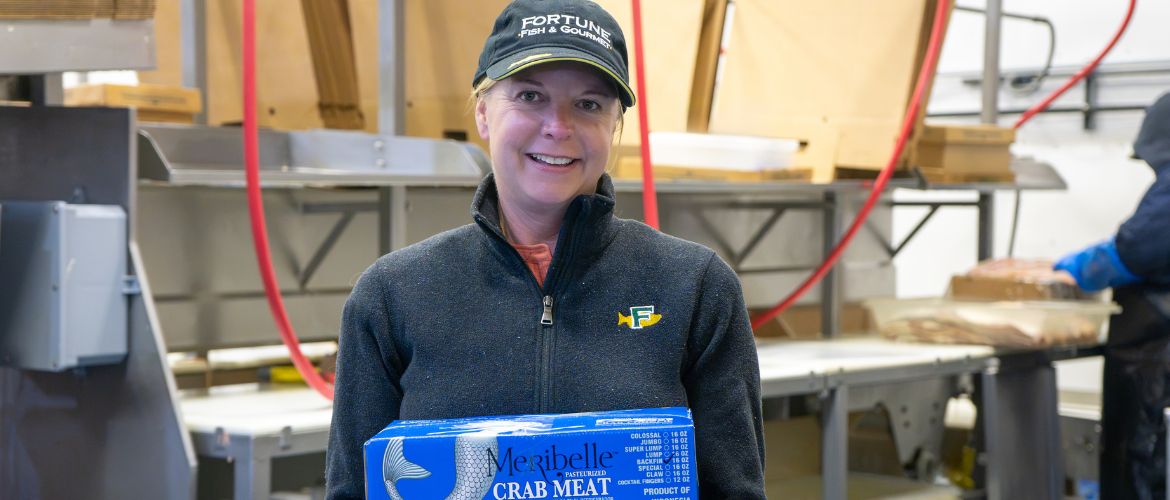
Stacy Knows Shrimp
Stacy Schultz is the Director of Frozen Seafood and formerly our Director of Supply Chain Stewardship Coordinator. With a degree in Marine Biology and decades of experience in responsible sourcing and sustainability of seafood, Stacy is our go-to for deep knowledge about species, sourcing, and sustainability.
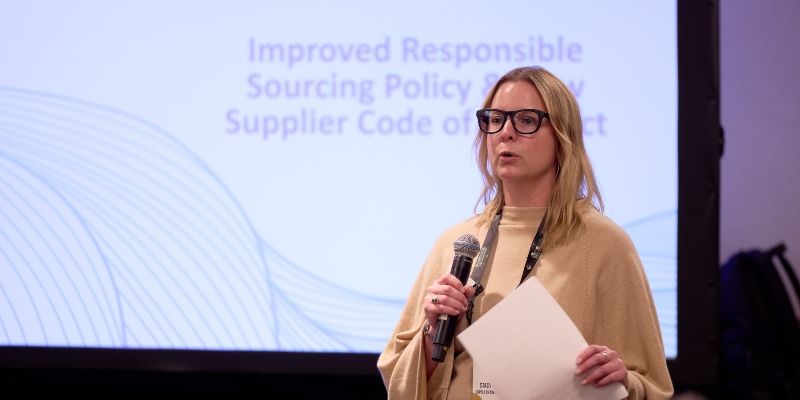
A former board chair of Sea Pact, Schultz has also helped unite seafood companies through collaborative efforts to improve fisheries and aquaculture, bringing an industry-wide perspective to the seafood served at the table. She represents Fortune at international industry conferences, speaking on panels, and staying in the know about sustainability and other hot seafood topics.
|
Photos courtesy of the Global Seafood Alliance |
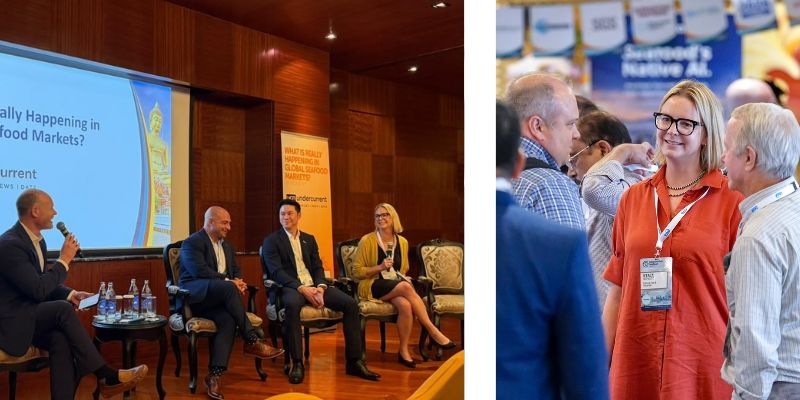
Stacy just returned from Bangkok, Thailand, where she attended the 25th edition of the Global Seafood Alliance's Responsible Seafood Summit. She spoke on a panel entitled “What is Really Happening in Global Seafood Markets?” sponsored by Undercurrent News. She toured an SGS lab, much like the SGS labs we use to test our private-label imported products.
Her passion for seafood and her knowledge of shrimp go deep. We asked her a few questions about her corner of the Fortune universe.
How did you get started in the seafood industry?
I love aquaculture! I'm from a family of Midwestern farmers. I scored an internship straight out of college at Waddell Mariculture Center raising shrimp and another one at Walt Disney World but couldn't find a fulltime job in aquaculture. There were and still are limited opportunities in aquaculture in the United States, so I ended up at the John G. Shedd Aquarium in Chicago as a Vet Technician. New to Chicago, I took a second job as a hostess at a seafood restaurant, to meet people. I took care of live fish during the day and worked with dead/seafood at night. The connections I made at Shaws eventually landed me at Fortune. Fifteen years later, I am the Director of Frozen Seafood at Fortune.
 |
How does shrimp sizing work?
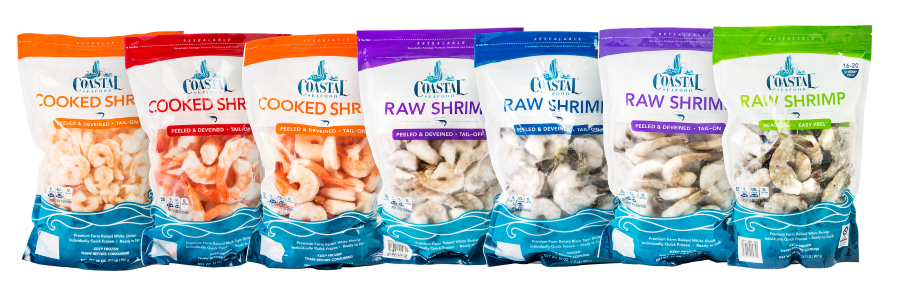
Shrimp sizing is the number of shrimp that make up a pound. So, if size is listed as 16/20, you get 16 to 20 pieces of shrimp in a pound. The lower the number, the larger the shrimp.
Is there a difference between shrimp and prawns?
The difference between shrimp and prawns is that they are different species, with different scientific names and classifications. However, many regional terms for seafood (like shrimp and prawns) end up being used interchangeably. For example, if you're in Europe, all shrimp are referred to as prawns. If you're in the U.S., most everything is a shrimp.
Are flavor differences between species, or is it more location-driven, like oysters?
There are definitely flavor differences by species and, in some cases, by location as well. Pink shrimp tends to be sweeter than other Gulf shrimp species. You might notice shrimp that are raised in colder waters tend to have a different flavor profile and texture than those in warmer waters. You are what you eat, right? So, if you're a wild shrimp living in the inshore waters of the Gulf, there is a high concentration of algae and plankton to feed on and different water quality; you will have a different flavor profile than shrimp in deep waters. In most cases, the flavor difference can be very subtle, and the casual enthusiast can't even tell the difference, especially if you put a sauce on it or dip it in cocktail sauce.
|
|
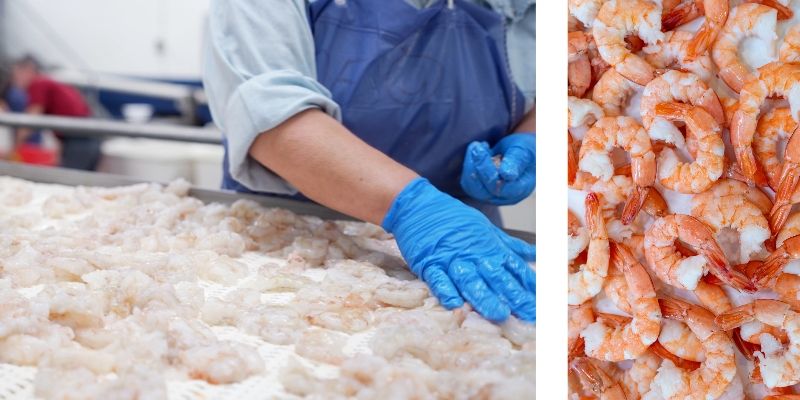
What are the pros of wild and farmed shrimp? Are there any things to look out for or keep in mind when purchasing?
For me, wild shrimp is a niche. We eat very few wild proteins outside of seafood, so it's special and can have a more earthy or natural flavor profile from its environment and what it consumes.
When you look at farm-raised shrimp, there is flavor consistency. There's no seasonality. You can get it year-round. It's easy for us to say, I want this size for a customer, and the farmer can grow the shrimp to that size. Shrimp are more easily sourced from a farm, versus wild where you are at the mercy of the seasonal closures, weather, water temperatures, and the availability of food.
So, for me, if you're looking for a consistent size, flavor profile, and year-round availability, you're looking at farm-raised shrimp. If you're looking for something niche and special with a little bit more oomph to it, then you should go wild.
What makes Coastal Seafood Shrimp stand out from the rest?
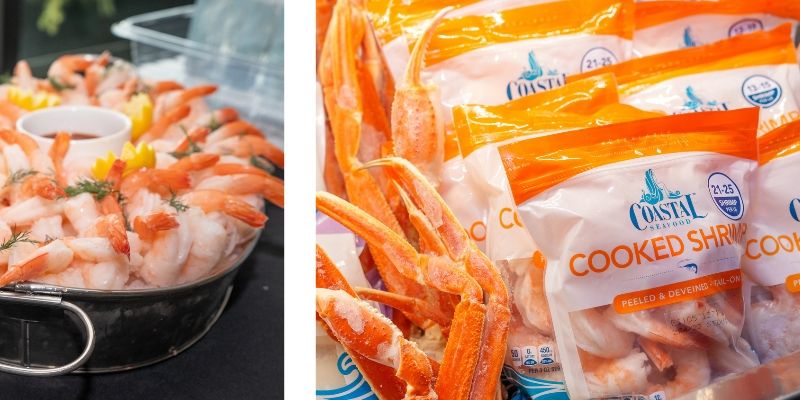
Coastal Shrimp is 4-star BAP certified (Best Aquaculture Practices). That's a certification that requires the farm, the feed mill, the hatchery, and the processing facility to be certified via thorough audits. Fortune also has a third-party audit performed at the processing plants we import from prior to shipping to the US., with random samplings of the product testing the products' physical characteristics and chemical characteristics to match our spec. We have strong supplier partnerships in the countries that we import our Coastal shrimp line from: Indonesia, India, and Ecuador. We have very tight specs and expect the best quality.
 |
Can you tell us about Sea Pact?
Sea Pact is very near and dear to my heart. I've served on the board since its inception in 2013. The organization was initially founded with a focus on project funding. A group of middle-of-the-supply-chain organizations, other seafood processors, and distribution companies like Fortune Fish and Gourmet, banded together to fund projects and support fisheries and aquaculture improvement projects collectively so that we could make more of a difference. More recently, to maximize our impact and drive transformational change, we are centering our efforts on three strategic priorities: specific seafood sector improvements, social responsibility, and responsible aquaculture.
 |
Regarding sustainability, what does Fortune look for in a supplier?
Regarding sustainability, Fortune looks to partnerships with our suppliers. They must be equally responsible and a good steward in sustainability or willing to elevate their sourcing. They must be transparent, providing traceability information, either currently sourcing products responsibly, or willing to work towards improvements. We never say "no" or turn our backs on someone who may be sourcing something that is not up to our standards. We offer to work with them to make improvements toward a better supply chain.
|
Learn more about the shrimp portfolio at Fortune
|