
A Salute to Sustainability
We’re proud to partner with producers of all kinds, from around the world, and some very close to home, who work every day to make food responsibly. These growers, farmers, cheesemakers, fishermen, and producers respect the Earth and make huge efforts to provide food with a conscience, not just for today, but with future generations in mind. They inspire us daily.
This is just a glimpse of a few of our friends, in honor of Earth Day. We don’t have room in one post to profile the vast number of producers that put the environment at the forefront of their work.
During April, the world focuses a little more on issues of sustainability—something we at Fortune do every day. We don't just think green, we think blue, because we know how vital marine ecosystems are to life on Earth.
Rushing Waters Trout
Rushing Waters Fisheries in Palmyra, Wisconsin, is known as the largest rainbow trout operation in Wisconsin, with 56 natural ponds on 80 acres near the Southern Kettle Moraine State Forest. It raises trout in spring-fed water, processes fish on site, and has built its reputation around freshness, consistency, and environmentally responsible farming. The farm raises premium-quality rainbow trout using all-natural, ecological aquaculture practices, in an ecosystem that closely mimics the trout’s native habitat.
- Trout are raised in crisp, clear 50° outdoor native spring water ponds
- Water flows through ponds naturally, with aerators to add dissolved oxygen
- Uses low-density stocking, so the fish are not crowded like in factory-farm systems.
- Trout are fed an all-natural, chemical-free, hormone-free diet
- Avoids antibiotics and hormones in the fish-raising process
- Uses soybean meal as the main feed ingredient, alongside fish meal and fish oil
- Processes fish on-site, which can reduce handling and transportation steps
- Commits to using 100% of each fish through the Great Lakes Fish Pledge, reducing waste
 |
Rappahannock Oyster Co.
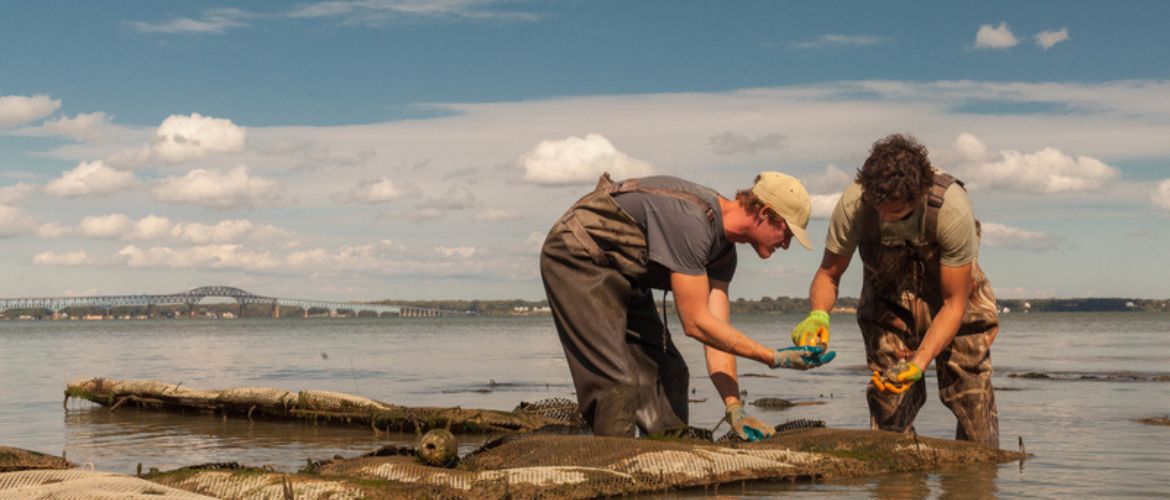
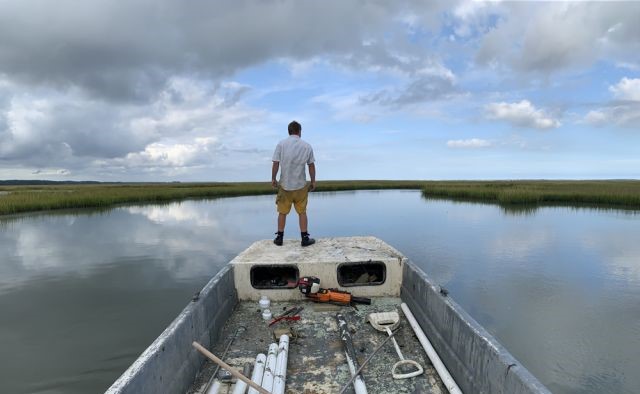
Ryan and Travis Croxton revived their grandfather’s oyster company, founded in 1899, in the ultimate story of sustainability on the Chesapeake Bay. In the 1880s, this remarkable watershed produced more than 20 million bushels of oysters a year, but by the time cousins Ryan and Travis had the opportunity to inherit their family's oyster lease in 2001, the industry had nearly collapsed. In 2004, the Bay produced just 48,000 bushels of oysters.
The Rappahannock philosophy is simple: nature does it best. Rather than attempting to control the environment, they farm native oysters (Crassostrea virginica) in a way that works with the natural environment rather than against it. Their sustainable practices include choosing healthy growing sites, elevating oysters in cages off the seafloor, and harvesting with great care.
- Their approach is restorative; they aim to improve the ecosystem while farming seafood
- Oysters are grown without added feed
- Their farming helps reduce pressure on wild oyster stocks
- The oysters help filter water and improve overall water quality in the Chesapeake Bay
- Support habitat recovery, including underwater grasses and other marine life
- They also work to rebuild oyster populations by returning more oysters to the water than they harvest
 |
Green Circle™ Chicken
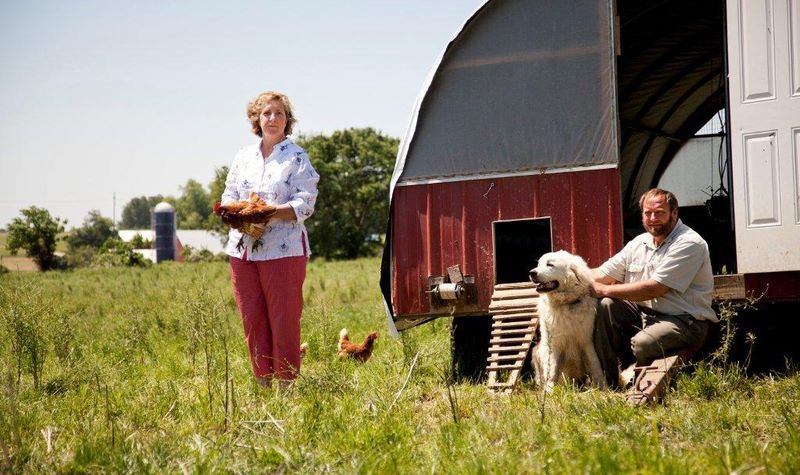
Our exclusive D’Artagnan Green Circle™ chicken is regeneratively raised in a pasture-based system of farming, where the waste is composted and returned to the soil to build the health of the land. It’s beyond net neutral—this farming is supporting and rebuilding the soil.
Ariane Daguin, the founder of D’Artagnan, personally developed this project to recreate the chicken she remembers eating in her native Southwest France. Following age-old processes, the chickens are fed clean surplus vegetables—bruised, cut, or otherwise unattractive—along with wholesome, regeneratively grown grains, including corn and soy. These unloved vegetables are saved from going to landfills, so not only do the chickens benefit from the vegetable diet, but it makes sense for the environment, too. This is the alchemy of turning food waste into healthy protein for people to eat.
- Regeneratively raised on managed pasture
- Certified Humane® by Humane Farm Animal Care
- Recognized by ASPCA and included in their “Shop With Your Heart” list for meaningful animal welfare standards
- Raised free-range
- Fed a diet of surplus vegetables sourced from local farms and markets
- Wholesome grain feed, including corn and soy
- No antibiotics or hormones, no animal by-products
Our signature bird proves the saying that “a happy chicken is a tasty chicken,” and is the result of years of work to raise a better bird.
 |
Cultivated Mushrooms
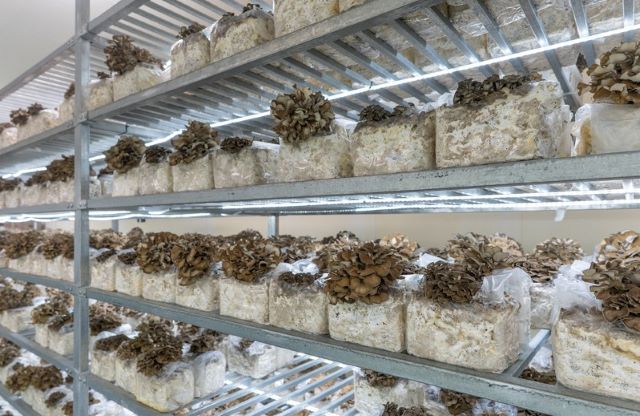
While we all love wild, foraged mushrooms, the demand for consistent, year-round fungi makes farming a necessity. One of our farms was the pioneer in cultivated mushrooms back in 1977, when they first grew shiitake in the U.S. They have a reputation as the premier grower of top-quality, flavorful forest mushrooms that are "no longer wild, but far from tame."
The farm consists of 27 growing rooms, coolers, a packaging area, offices, a processing area, fermentation capabilities, laboratory facilities, and a soil shed.
- Its Michigan location provides abundant fresh water and access to lumber-industry byproducts for mushroom substrate
- Materials like sawdust, woodchips, bark, and leaf compost help mimic the forest floor where mushrooms naturally grow
- The operation is designed to recreate wild forest conditions that support mushroom growth
- The farm is certified organic by Quality Assurance International, a USDA-accredited certifier
 |
Point Reyes Farmstead Cheese Co.
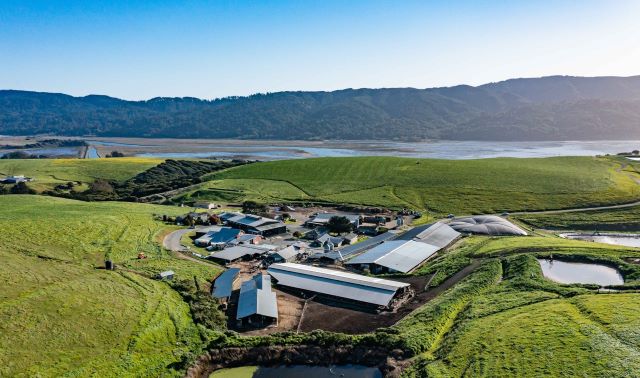
Point Reyes Farmstead Cheese Company is an example of how one family can make a huge difference. With 720 precious acres of California’s coastal pastureland in their care, four generations of the Giacomini family have committed to preservation and sustainability. They treat their dairy as a living ecosystem, not just a production site.
- Their practices include rotational grazing to protect soil, no-till seeding, composting and using manure as natural fertilizer
- Conserving and reusing water
- Managing pasture health to reduce erosion and runoff into Tomales Bay
- The farm uses renewable energy systems, including a methane digester and solar power, to cut emissions and turn waste into clean energy
Just as important, the cheese reflects the land itself: the cows graze on carefully managed pastures, producing superior milk, and the farm emphasizes long-term stewardship over short-term output. Since 2000, when the family turned their dairy farm into an artisan cheesemaking operation, Point Reyes cheeses have become a favorite among food lovers.
 |
O-Med Olive Oil
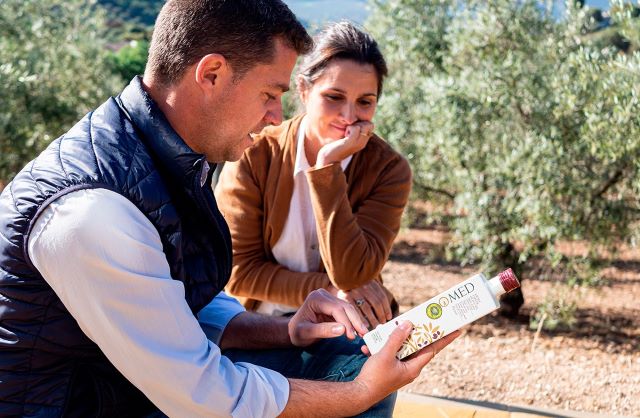
We are proud to offer a wide range of O-Med olive oils in our portfolio. The Garcia-Casas family has been harvesting their olive trees for generations. Today, their olive groves and mill produce exceptional olive oil in the heart of Andalusia, Spain. With tradition and experience on their side, the family is also deeply committed to sustainability and using innovative methods to reduce their environmental impact.
- Their groves are managed using organic practices, conserving water, and nurturing soil health
- The mill operates on solar energy, significantly lowering its carbon footprint
- Waste from the olive pressing process is repurposed as natural fertilizer or biomass fuel, creating a circular, zero-waste system
- They use glass and recyclable packaging
By prioritizing quality, biodiversity, and resource conservation, O-Med ensures that every bottle of olive oil reflects not only the flavors of the land, but a lasting respect for it.