

Unearthing Flavor: A Guide to the World of Truffles
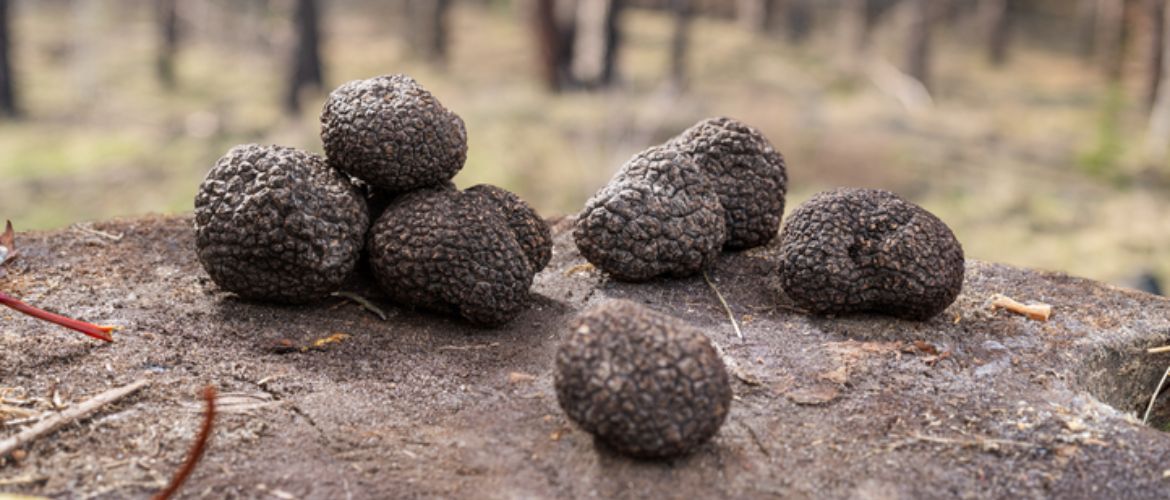
Truffles are the true fruit of the earth, rarer and more precious than any other edible root, tuber, or mushroom. Called the “diamond of the kitchen” by 18th-century epicurean Jean Anthelme Brillat-Savarin, the truffle is prized among discerning food lovers. The distinct aroma and intense earthy flavor can transform ordinary dishes into exquisite experiences. Ancient Romans attributed therapeutic and aphrodisiac properties to the truffle, and though this remains unproven today, there is certainly a fervor for truffles. Here is an overview of the types of truffles we import from around the world in different seasons.
 |
Black Winter Truffles
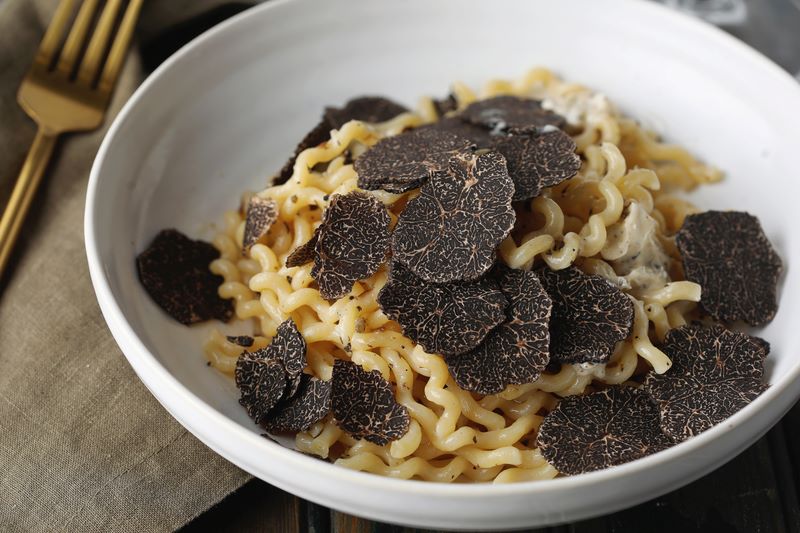
Tuber melanosporum, AKA Perigord truffle, after the legendary truffles of the Perigord region of France. Tuber melanosporum grows in other European countries, so this name can be confusing.
Season: Mid-December to February, with slight variation. After years of attempts, the black winter truffle has been successfully cultivated in Australia; their winter is mid-June through early August, so we get winter truffles all summer.
Characteristics: Dark, robustly veined flesh that appears almost black/purple, with the strongest flavor and aroma of all the black truffles. Notes: cocoa, earth, and tannins.
Culinary Uses: Slice paper-thin with a mandoline or truffle shaver. Place thin shavings under the poultry skin before roasting. Layer in a foie gras terrine, or make Tournedos Rossini, a filet mignon with foie gras and truffles on top. Fresh slices or grated truffles can be used in wine or cream-based sauces, or shaved onto cooked pasta, scrambled eggs, or potato dishes.
 |
Burgundy Truffles
Tuber uncinatum, AKA Burgundy truffle, is also named for the region famous for producing it: Burgundy, France. Though it grows more widely than any other truffle species, from Spain to Eastern Europe, as far north as Sweden, and as far south as North Africa, it is known as the “Burgundy truffle.”
Season: Harvested from September to December.
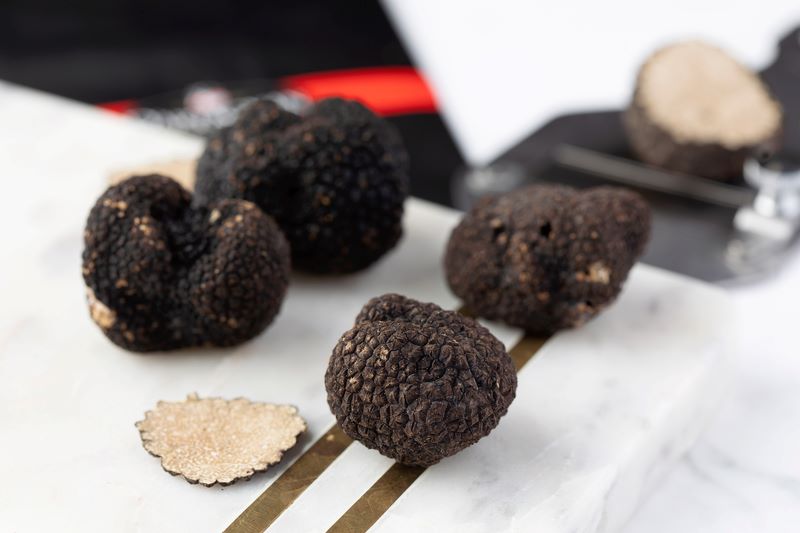
Characteristics: The Burgundy truffle has pointed, diamond-shaped “warts” on the skin. The flesh is a chocolate-brown color lighter than the winter truffle, with a more nuanced aroma and taste. Nutty notes, with caramel and hints of earth.
Culinary Uses: Burgundy truffles should be enjoyed raw, or slightly warm, shaved over pasta, risotto, potatoes, with cheese dishes, and creamy soups or sauces.
 |
Black Summer Truffles
Tuber aestivum, the mild summer truffle is at the other end of the spectrum from the intense black winter truffle. Found in central and northern Italy and Spain, especially common in Eastern Europe, and throughout Europe.
Season: Harvested from May to September.
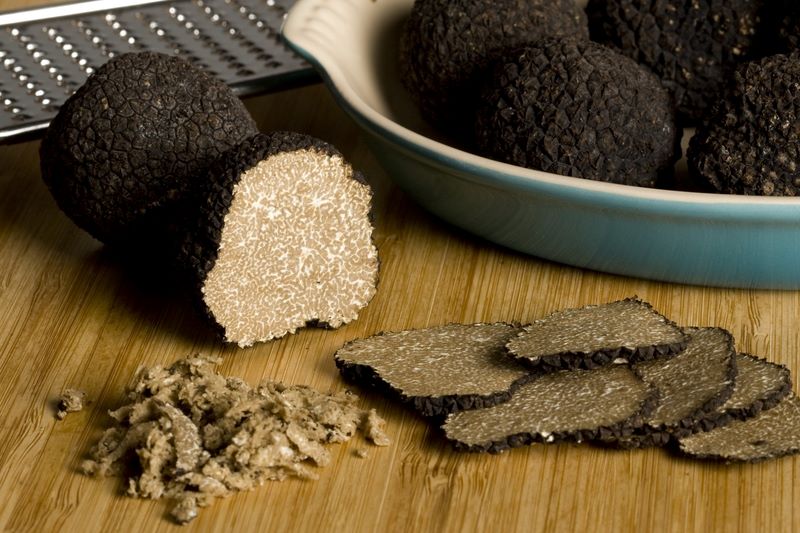
Characteristics: Black on the outside, with pale flesh, ranging from cream to grey as the truffle matures. More delicate flavor than either the Burgundy or black winter truffle. Notes of hazelnut and caramelized cream. Prized for their firm, crunchy texture, and bite.
Culinary Uses: Julienne, shave thinly and serve raw or slightly warmed to protect the delicate flavor. Layer truffle flavors by using truffle butter or truffle oil, and fresh shavings of summer truffle as an accent.
 |
White Winter Truffle
Tuber magnatum, sometimes called a Piedmont or Alba truffle, because Italy is known for producing an abundance of white truffles.
Season: Harvested from October to December.
Characteristics: Lumpy in shape, with skin ranging from pale yellow to ochre, with a creamy, marbled interior. The smell is intensely garlicky, pungent, and earthy, like honey and aged cheese; their flavor is delicate and nutty, with notes from the trees whose roots shelter the truffles. Sizes range from small knobs measured by the ounce to massive specimens weighed by the pound.
Culinary Uses: White truffles are seldom cooked, as the heat will destroy their strong scent. Slice thinly with a truffle shaver over a finished dish of pasta, risotto, etc., and allow the heat of the food to release the aroma.
 |
The Right Way to Store Truffles
Once a fresh truffle is out of the ground, it doesn’t keep long. To best preserve a truffle, wrap it in a paper towel, place it in an airtight plastic container, and refrigerate it. Do not clean the truffle until you are ready to use it. Avoid condensation and humidity which can cause rot.
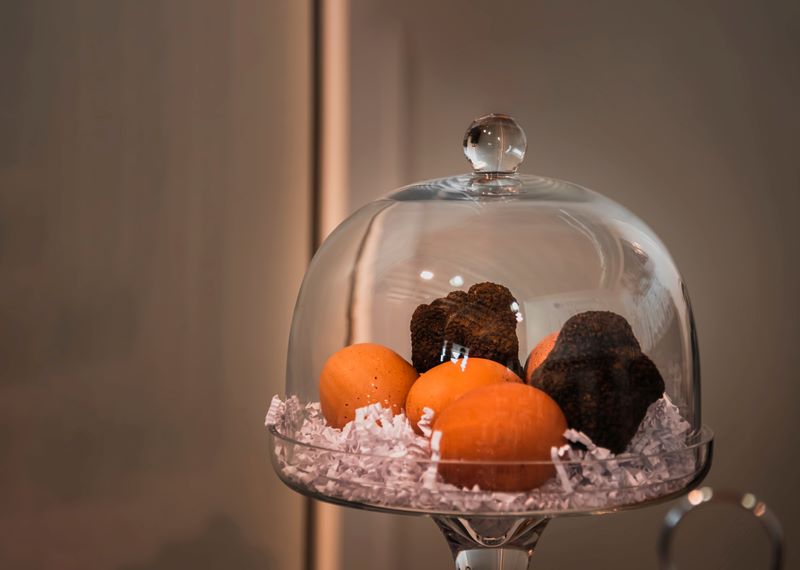
Do not store in dried rice, as the rice dehydrates the truffle. You can store truffles with eggs in the refrigerator, which infuses truffle flavor into the eggs. Be sure the shells are perfectly dry. It’s best to allow truffles to come to room temperature before using them.